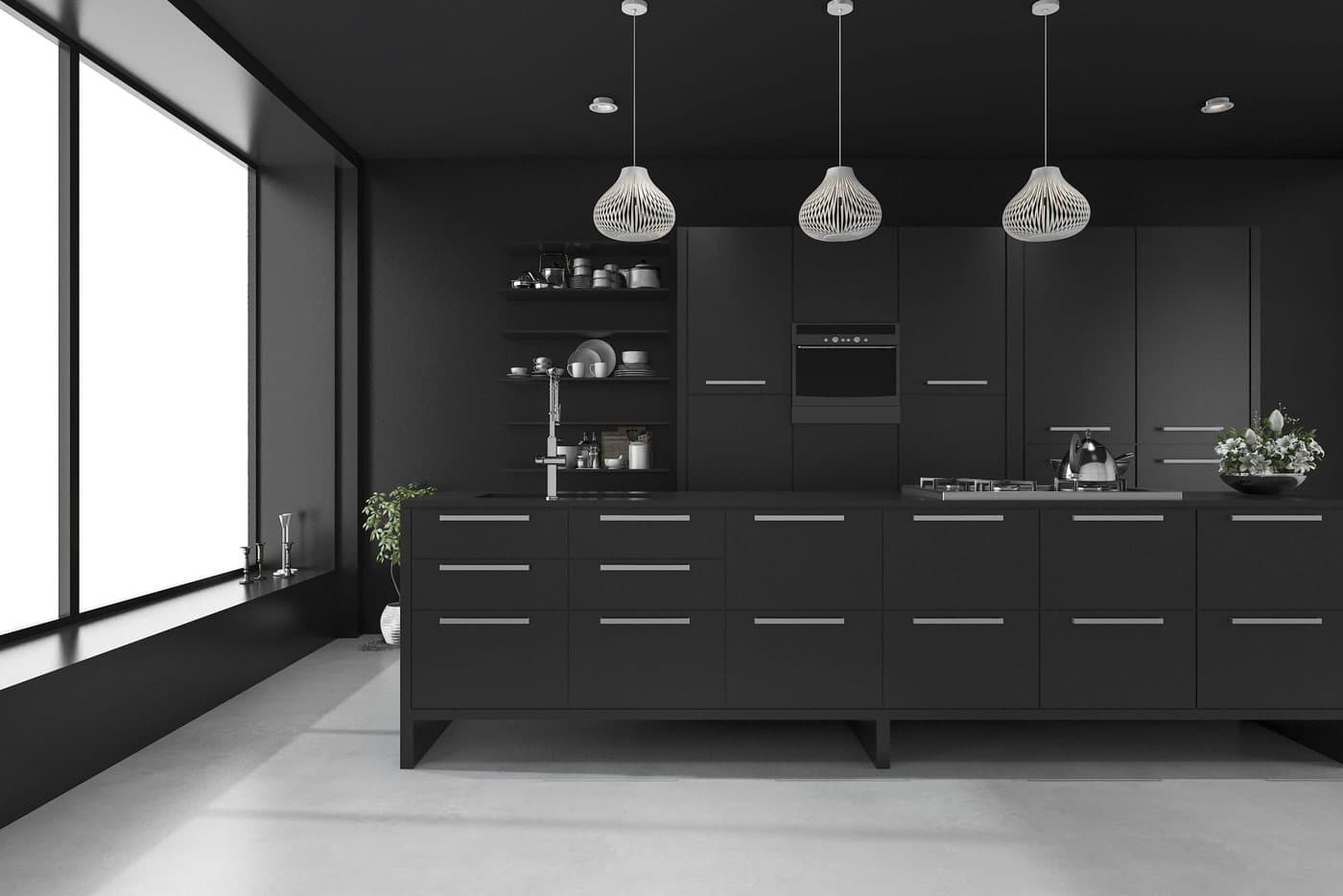
Ask anyone who has lived with a new kitchen for two years what they would change, and the answer is rarely the colour. It is the extraction — that it is too weak, too small, too noisy, or that it was never ducted properly and the ceiling above the hob has begun to yellow.
It happens because extraction is chosen last, after the cabinetry has taken the budget, from a catalogue whose ratings were set for kitchens that cook differently.
Why Pakistani cooking is a harder job
The difference is not a matter of national pride, it is physics. Frying at high heat, tempering spices in hot oil, and long cooking times release far more airborne oil and far more steam than the short, moderate-heat cooking most European appliance ratings assume.
That oil does not disappear. Whatever the hood fails to capture lands on the ceiling, on the wall units, on top of the fridge and eventually on you. A kitchen that smells of last week is an extraction problem, not a cleaning problem.
Ducted beats recirculating, every time it is possible
A ducted hood takes the air out of the building. A recirculating one passes it through a carbon filter and returns it to the room. The first removes heat, steam, odour and oil; the second addresses odour reasonably and the rest barely at all.
In an apartment, ducting is sometimes genuinely impossible, and then a recirculating hood with a properly maintained filter is the right compromise — with the filter treated as a consumable that is replaced on schedule, not when it starts to smell. In a house, there is almost never a good reason not to duct.
The duct route has to be decided before the ceiling and the cabinetry are drawn, which is why it belongs in the first survey. Our process puts services on the drawing before joinery for exactly this kind of reason.
Sizing: wider than the hob, always
Vapour rises in a plume that spreads outward as it climbs. A hood the same width as the hob is capturing the centre of that plume and letting the edges past. Going one size wider than the hob is the cheapest performance improvement available.
Height matters as much as width, and it is the one figure worth taking from the manufacturer rather than from advice on the internet: too high and capture collapses, too low and it is both a nuisance and, over a gas flame, a hazard.
Noise is a specification, not a surprise
A hood that is too loud gets run on its lowest setting, which is the same as not having one. In an open-plan room where the kitchen faces the living area, noise is the difference between extraction that gets used and extraction that gets switched off.
Ask for the noise figure at full and at normal speed. If nobody can tell you, treat that as an answer.
Where it goes wrong on site
- Long, winding duct runs with several bends — every bend costs you performance.
- Duct diameter reduced to fit through a ceiling void, which throttles the whole system.
- A hood chosen after the wall units are built, so it has to fit a gap rather than the hob.
- Recirculating installed by default in a house where ducting was perfectly possible.
- Filters never replaced, on the assumption they are permanent.
Get it on the drawing early
Extraction is not an appliance you buy at the end. It is a service that dictates a duct route, a ceiling void, an electrical point and the width of a cabinet, and every one of those is cheaper to decide before anything is cut.
We put it on the drawing at survey stage along with the layout — see how the layouts differ — and we would rather argue about it early than fit a beautiful kitchen that yellows. If you are planning one, send us the room.
Common questions
- What suction does a kitchen chimney need in Pakistan?
- More than a European catalogue suggests. Pakistani cooking uses higher heat, more oil and longer cooking times, so a hood specified from a European kitchen brochure is usually undersized for the same room here.
- Is a ducted or a recirculating chimney better?
- Ducted, wherever the building allows it. A recirculating hood filters odour reasonably well and does comparatively little about airborne oil, which is the thing that eventually settles on your ceiling and cabinet fronts.
- How high should a chimney be above the hob?
- Follow the manufacturer's figure for that model rather than a rule of thumb. Too high and it stops capturing; too low and it is in the way and a fire risk over a gas burner.
- How wide should the hood be?
- At least as wide as the hob, and wider is better. Cooking vapour rises in a plume that spreads as it goes, so a hood narrower than the hob is capturing the middle of it and letting the edges into the room.