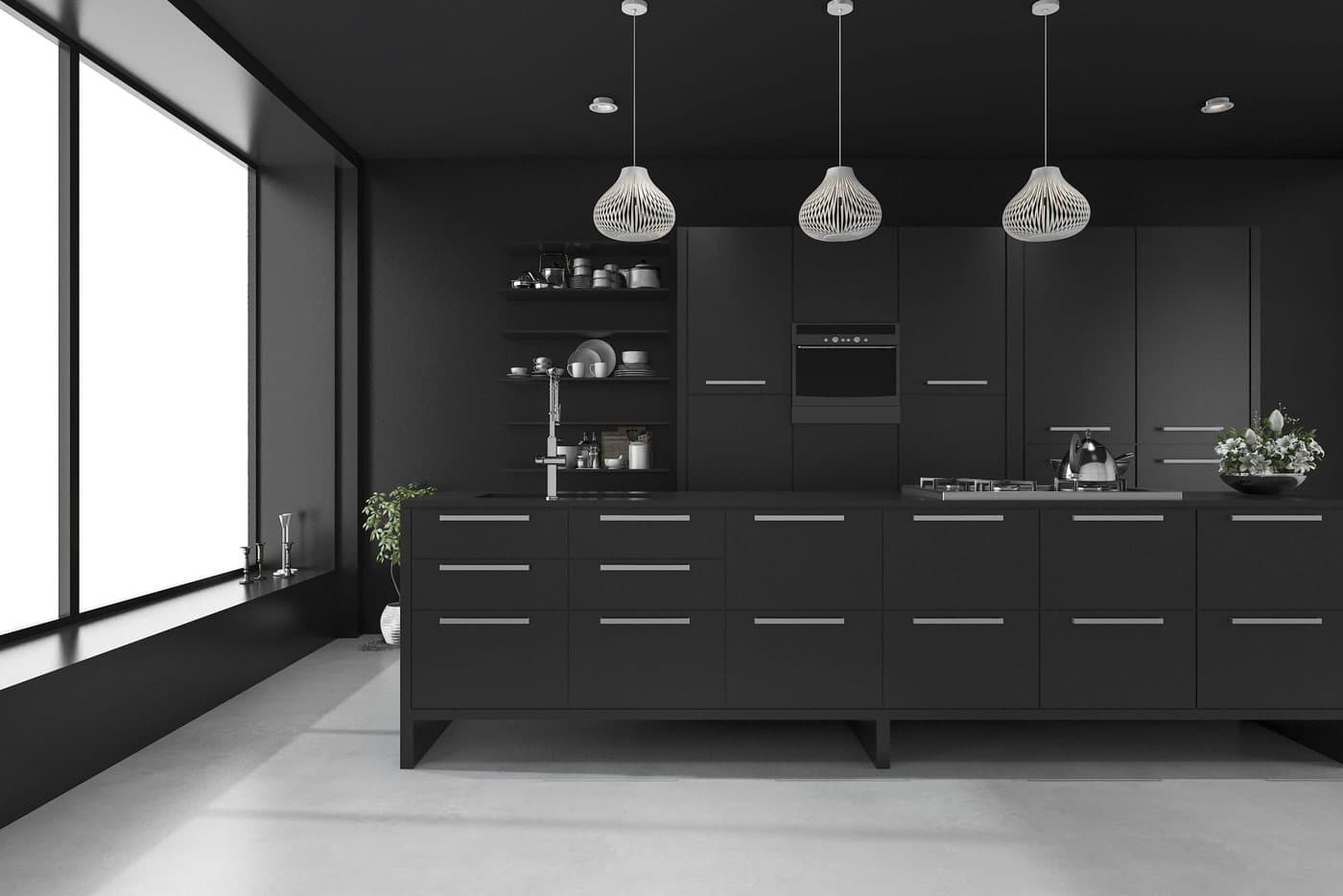
Interior design in Karachi is one of the most competitive service markets in the country and one of the least regulated. Anyone can print a card. The gap between the best work being done here and the worst is enormous, and — this is the difficult part — the two are almost indistinguishable at the quotation stage.
This is what we would tell a friend who was about to spend serious money on their home.
Designer, decorator, contractor — they are not the same job
A decorator selects. A contractor builds. A designer is responsible for the thing working — for the layout, the services, the sequence and the tolerances — and stays responsible when something on site does not match the drawing. Plenty of firms in Karachi sell the third job and staff it for the first.
The tell is who takes the measurements. If nobody senior has been to your home and put a laser on the walls before you were given a price, you have been given a guess.
Karachi's buildings have their own problems
Walls here are rarely square and floors are rarely level. In older DHA and PECHS properties, twenty millimetres of fall across a five-metre run is normal rather than exceptional — our recent projects are almost all of this kind. A design drawn on assumptions gets cut on site, and cutting joinery on site is how you end up with inconsistent shadow gaps and doors that do not line up.
The climate adds its own list — coastal humidity, heat load on west-facing glazing, the ventilation a Karachi kitchen actually needs. These are not aesthetic questions, but they are the ones that decide whether the aesthetics survive.
“Every hand-off between people is a millimetre lost. The best interiors in this city are the ones with the fewest hand-offs.”
How to read a quote that is not comparable
You will be given quotes that differ by a factor of two and appear to describe the same kitchen (here is why). They do not. Before comparing anything, get every quote itemised into the same five lines (this is how we itemise ours):
- Carcass — the board, its thickness, and whether it is moisture-resistant.
- Fronts — the finish family, and who applies it.
- Worktop — the material, the edge detail, and who templates it.
- Hardware — named brands and series, not the word “imported”.
- Lighting and electrical — what is included and what your electrician is expected to do.
Once those five lines are visible, the cheap quote usually stops being cheap. That is not an argument for spending more — it is an argument for knowing what you are buying.
The questions worth asking out loud
- Who manufactures this — your own workshop, or a subcontractor? Can I visit it?
- Will I see the design in 3D, in my actual room, before anything is cut?
- What is the written schedule, and what happens if it slips?
- Who protects my floors, and who cleans up at the end of each day?
- If a drawer stops closing properly in eight months, who comes back?
None of these are unreasonable, and a studio that finds them awkward has told you something useful.
What a proper process looks like
Survey, then design, then a 3D 360° walkthrough of your own room, then an itemised quote, then manufacture, then installation, then handover. Seven stages, and you should be able to see where you are at any point. When those stages happen inside one company rather than across four, the tolerances hold — which is the entire reason for organising it that way.
What it does to the value of the property
In DHA, Clifton and PECHS (see the work), a properly built kitchen and fitted wardrobes are among the few interior investments that survive resale, because a buyer can see immediately that they will not have to redo them. Cosmetic work does not have the same effect — a repainted room is priced as a repainted room.
Where we fit
Amaza Homes designs, manufactures and installs from one workshop in DHA Phase 6 — kitchens, wardrobes, vanities, doors, and the civil work, flooring, false ceilings and media walls around them. That is the whole proposition: fewer hand-offs, named hardware, an itemised price, and the same phone number in six months.
Send us your plan or a photograph of the room. The first conversation is free and there is no obligation at the end of it.