
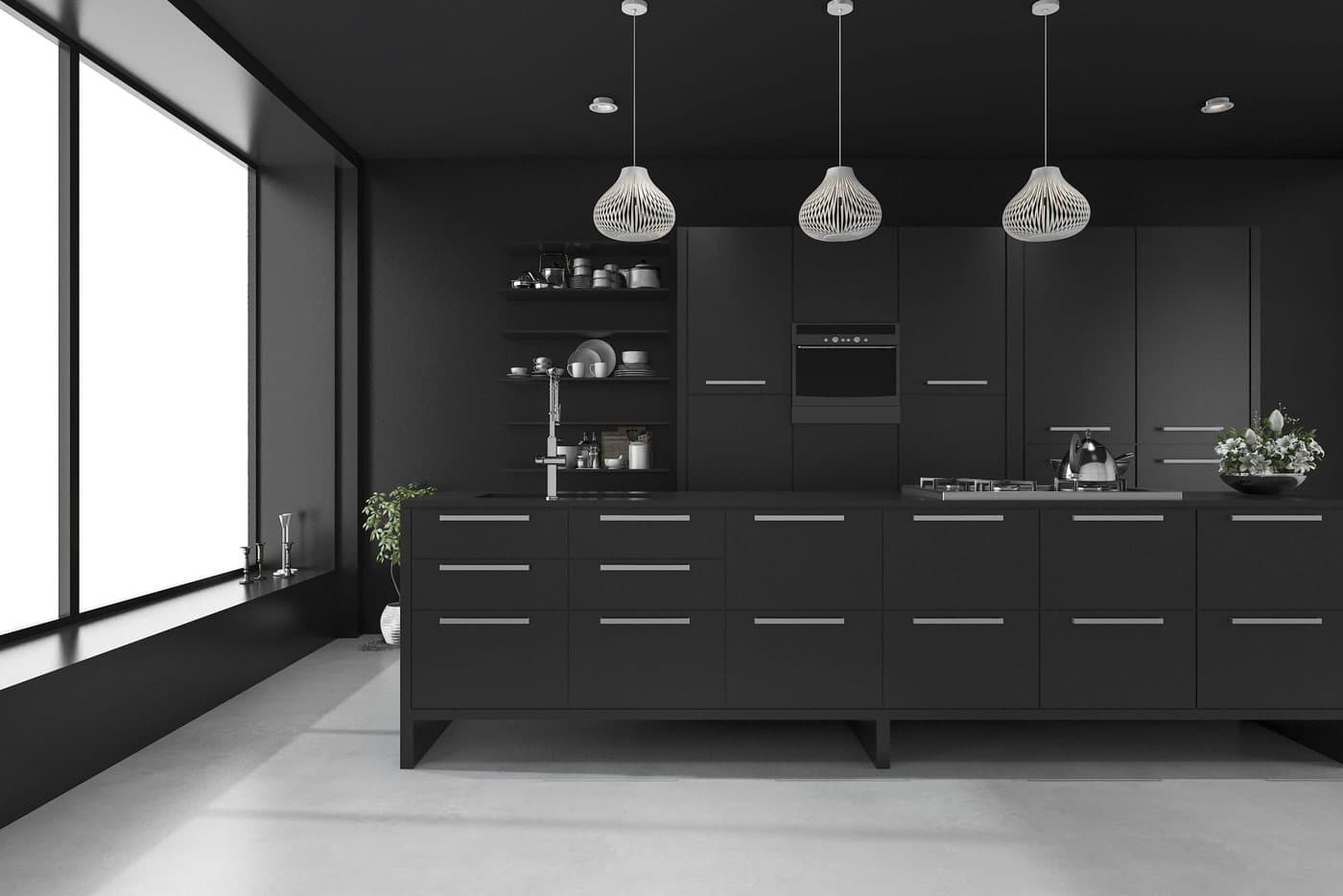
Hardware is usually the last thing chosen and the first thing that fails. It is a small percentage of what a bespoke kitchen costs — see where the rest of the money goes — and close to a hundred percent of how the kitchen feels — because handles, hinges and runners are the only parts of the joinery you physically touch, and you touch them several thousand times a year.
If you are building or renovating a kitchen in Karachi, Lahore or Islamabad, this is the part of the specification worth slowing down on.
Start with the mechanism, not the handle
Almost everyone starts with what the handle looks like. Start instead with what sits behind the door. A drawer runner is rated for a weight and a number of cycles; a hinge is rated the same way. Cheap runners feel identical on the day they are installed and noticeably different eighteen months later, when the drawer has started to drop at the front and no longer closes flush.
We specify Blum and Hettich throughout, and we name the exact series on the quote rather than writing “imported”. If a quote you are comparing does not name the hardware brand, that is not an oversight — it is where the saving is being made.
“Ask for the hardware brand in writing. A studio that is proud of its runners will name them without being asked.”
Match the finish to the kitchen, not to the trend
Finish is where personal taste belongs, but a few pairings hold up better than others in a Karachi home:
- Matte black and brushed nickel sit well against modern super-matte and anti-fingerprint fronts — the two low-sheen surfaces read as one material.
- Brass and champagne gold belong with Italian-inspired and classical joinery, and with stone that already has warmth in it. Against a cold grey slab they can look applied rather than designed.
- Stainless steel and chrome are the safest long-term choice in a working family kitchen: they take abuse, they clean easily, and they do not date.
- Concealed and finger-pull systems give you the cleanest possible run of doors, but they demand tighter tolerances — which is exactly why they expose a poorly built carcass.
Handles or knobs — decide by drawer weight
There is a simple rule that survives every trend. Anything heavy, anything you open with a full hand, anything you open while holding something else — that wants a bar handle you can hook four fingers into. A pan drawer with a knob is a design decision you will resent within a month.
Knobs work on light doors, on upper cabinets, and where the cabinetry is meant to read as furniture rather than as a kitchen. Mixing the two deliberately — bars on the base run, knobs above — is a legitimate choice, not a compromise, as long as the finish is consistent.
The climate matters here more than the catalogue admits
Most hardware catalogues are written for European humidity. Karachi is not that. Coastal air is hard on plated finishes, and a cheap lacquered brass will pit and cloud within a couple of seasons in a kitchen near the sea. Solid stainless, properly finished brass and quality PVD coatings all hold; thin electroplate over zinc does not.
The same logic applies to the board behind the hardware. A hinge is only as good as what it is screwed into, which is why we use moisture-resistant boards in kitchens and vanities as standard rather than as an upgrade.
Do not forget the wardrobes
Hardware is what visually connects a kitchen to the wardrobes and doors elsewhere in the same home, and it is the cheapest way to make a whole interior read as one scheme:
- Sliding wardrobes want long, slim vertical bars — they suit the door proportion and give you somewhere to pull from at any height.
- Hinged wardrobes carry a statement handle better than a kitchen does, because there are fewer of them in the eyeline.
- Concealed finger-pulls give the calmest bedroom, which is usually what a bedroom wants.
- Pocket doors — the ones that slide back into the carcass — are worth the money in a kitchen where you want the working wall to disappear when guests arrive.
Where appliances come into it
If you are specifying built-in appliances, choose them before the hardware, not after. Appliance handles are fixed, and they set the metal temperature for the whole run — a warm stainless against a cold chrome will always look slightly wrong and nobody will be able to say why. Our sister company FOTILE Pakistan supplies much of the cooking equipment we build around, which means we can see both sides of that decision before anything is ordered.
The short version
Name the hardware brand on the quote. Choose the mechanism before the finish. Put bar handles on anything heavy. Assume the coastal air is going to test whatever you pick. And specify the wardrobes and doors at the same time as the kitchen, so the whole house agrees with itself. If you want to see how a single finish carries across all four, try it in the visualiser.
Bring your plans to the showroom in Bukhari Commercial, DHA Phase 6, and you can open a full-size drawer on every runner we use before you decide.


